|
|
|
Dear friend
As we move into the final quarter of the year, the Academy is looking forward to our very own “awards season”, starting with an official announcement about our Workshops Program recipients next week.
Paul Bourke Award winners will be announced on 13 October and the 2025 New Fellows list published on 28 October. All announcements will be shared on the News page of the Academy’s website as well as in the November edition of this newsletter. Congratulations to all those who have been recognised, across career stages, for excellence in the social sciences.
Social Sciences Week 2025 was a resounding success, with more than 70 events held across the country showcasing the depth, diversity, and relevance of the social sciences to a wide audience. Thank you to everyone who contributed their time, expertise, and creativity to #SSW2025. Work has already begun on the 2026 program so please get in touch if you have ideas or would like to partner with the Academy as an event host, speaker or sponsor.
Later this month, the Academy is involved in two Policy Roundtables. On 24 October, Fellows will join the Department of Treasury to assist in planning for the 2026 Intergenerational Report. On 28 October, and in partnership with the Melbourne Institute, an in-person and online Flash Forum on Trump Tariffs and Global Financial Markets will take place between 11.00am and 12.30pm. Register to attend here - all welcome.
Excitement is building for the Academy’s annual Gala Dinner at the Sydney Opera House on Monday 17 November. This event will celebrate the achievements of our newly elected Fellows, recipients of the Paul Bourke Awards and the inaugural Rechnitz Memorial Award that recognises outstanding research leadership and advancement of knowledge in Indigenous society.
Aboriginal human rights and social justice campaigner and Academy Fellow Professor Tom Calma AO FAA FASSA FAHA will deliver an address on Indigenous knowledges and the social sciences. He will be joined by Australia’s Chief Scientist, Professor Tony Haymet, who will offer a brief response. Academy Fellows can book a discounted ticket online here.
As global and national events unfold, social sciences research is more important than ever before in ensuring social cohesion and vibrant and trusted democratic processes. This was highlighted in a recent article on the importance of free speech at our universities and in our society by former Chief Justice of Australia and Academy Fellow Robert French.
As always, thank you for your ongoing support of the Academy and the social sciences.
Kate Darian-Smith
President |
|
|
|
|
|
Celebrating our Fellows |
|
Professor Warwick Anderson has been awarded the 2025 Arthur J. Viseltear Prize for Lifetime Excellence and Achievement in Public Health History. The prize will be awarded at the annual American Public Health Association meeting in Washington DC in November.
The Viseltear award values and recognises scholars who have worked on questions and subjects relating to histories of public health, colonisation and race, social histories of marginality, questions of health access and rights, industrial power and health disparities; and also seeks to honour and recognize scholarship in the US and equally, in the global South.
Professor Megan Davis AC FAHA FASSA FAAL AC was made a Companion of the Order of Australia (AC), this month - for eminent service to the law and to social justice, to the national and international advocacy of the rights of Indigenous peoples, and to the community. |
|
|
|
|
Expression of Interest: Vacancy on the International Committee
The Academy invites expressions of interest from Fellows to join its International Committee (IC) as a member as soon as possible. The Fellow appointed will serve until 31 December 2027.
The IC assists the Academy to facilitate international social science research exchange, collaboration and leadership, and promote equity by supporting social science research capability in low- and middle-income countries across the Asia–Pacific. Fellows with expertise in one or more Asia–Pacific countries are particularly encouraged to express an interest.
The IC’s full Terms of Reference are available on request. To register your interest or discuss the role, please contact the International Team at international@socialsciences.org.au or the International Committee Chair, Professor Adam Possamai.
|
|
|
|
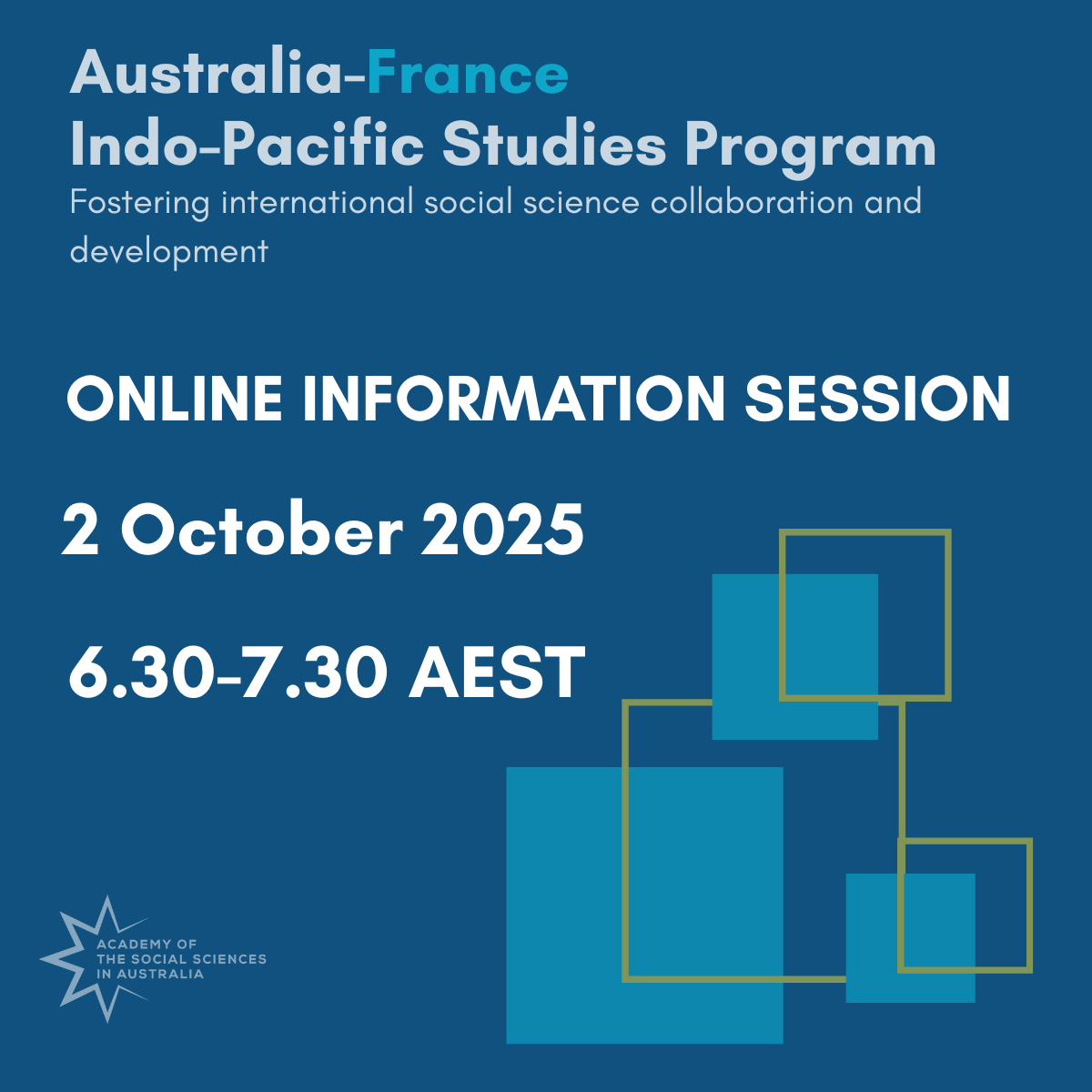
AFIPS Visiting Fellowships open until 13 October
The Australia-France Indo-Pacific Studies Program (AFIPS) Visiting Fellowship program supports early-career academic or professional researchers from (by nationality or residence) Indo-Pacific Nations, France (including French overseas territories), with support from the Australian Government as part of the AFIPS Program.
The Academy facilitates visiting fellowships for up three months with one or more research organisations in Australia (universities, think tanks, institutes). Each fellowship includes funding of up to AU$18,900 to cover travel costs, a living stipend, and a conference or training allowance.
The program enables visiting fellows to advance their individual research projects while also building meaningful connections with Australian and Indo-Pacific researchers and institutions.
Find out more or apply here.
Online information session tomorrow 2 October 6.30pm AEST. View event and register here.
|
|
|
|
|
|
|
|
|
|
|
|
|
Policy |
|
Data roundtable summary |
|
In July 2025, the Academy of the Social Sciences in Australia convened a Policy Roundtable exploring how integrated government data can support more effective, efficient policy development and the barriers to use and equitable access. The roundtable connected researchers and other data users with funders and data custodians in government to share different perspectives on the challenges faced and map possible models for sustainable, mutually beneficial outcomes. A summary of the discussion is available to read and download on the Academy website. |
|
|
|
|
|
|
FEATURED FELLOW |
|
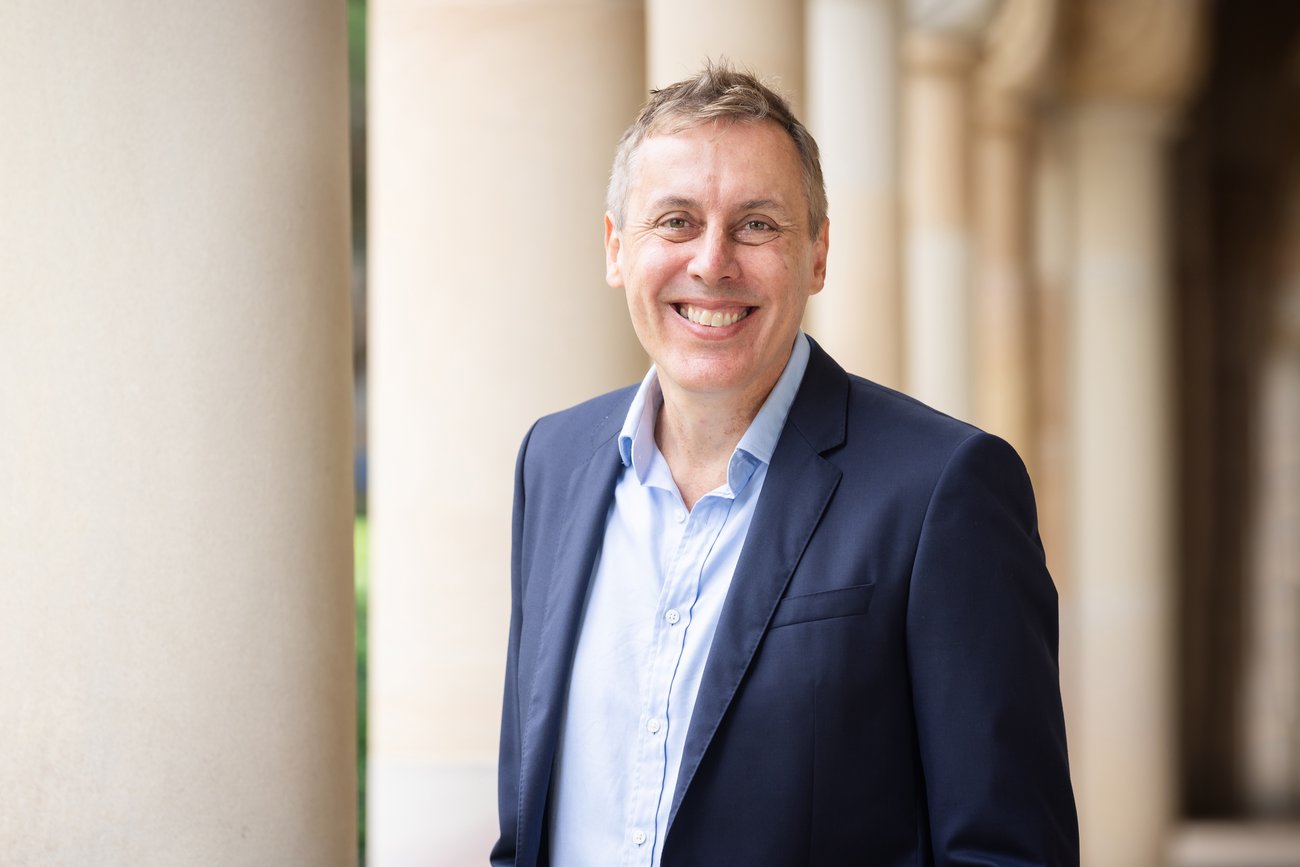
Professor Matthew Hornsey |
|
|
|
|
|
Discipline: Psychology
Affiliation: University of Queensland |
|
|
|
What initially drew you to your field of study? |
|
|
What continues to motivate your work?
|
|
|
|
Existential panic really. Since 2007, humans have emitted over a quarter of all the greenhouse gases ever emitted by our species, and last year global CO2 emissions hit a record high. In that context, overcoming polarisation, conspiracy theories and campaigns of disinformation about climate change seems like a good use of my time.
|
|
|
The stakes are simply too high to look away. Climate change, misinformation, and social division are reshaping our world, and social science has tools to help us respond. I’m motivated by the belief that understanding human psychology and social dynamics can unlock better pathways forward.
|
|
|
|
What are you most proud of?
|
|
I’m proudest when my research doesn’t just sit on a shelf but is used in policy, public communication, and by organisations trying to shift behaviour for social good. Seeing ideas travel outside the academic world and have real-world impact is the ultimate goal. |
|
|
What question or issue, in your field, keeps you awake at night? |
|
Whether we can bridge the gap between long-term visions and short-term incentives. We know what needs to be done on issues like climate change, but aligning individual, organisational, and political motivations is a puzzle that still keeps me up. |
|
|
|
What is your desert island book, song and movie? |
|
|
|
|
|
How Music Works by David Byrne because I like music but I’m also a nerd. |
|
|
|
Something by Grimes because it reminds me to embrace creativity and strangeness.
|
|
|
Sherlock Jr by Buster Keaton is over 100 years old but still the coolest film I’ve seen |
|
|
|
|
|
|
|
|
|
|
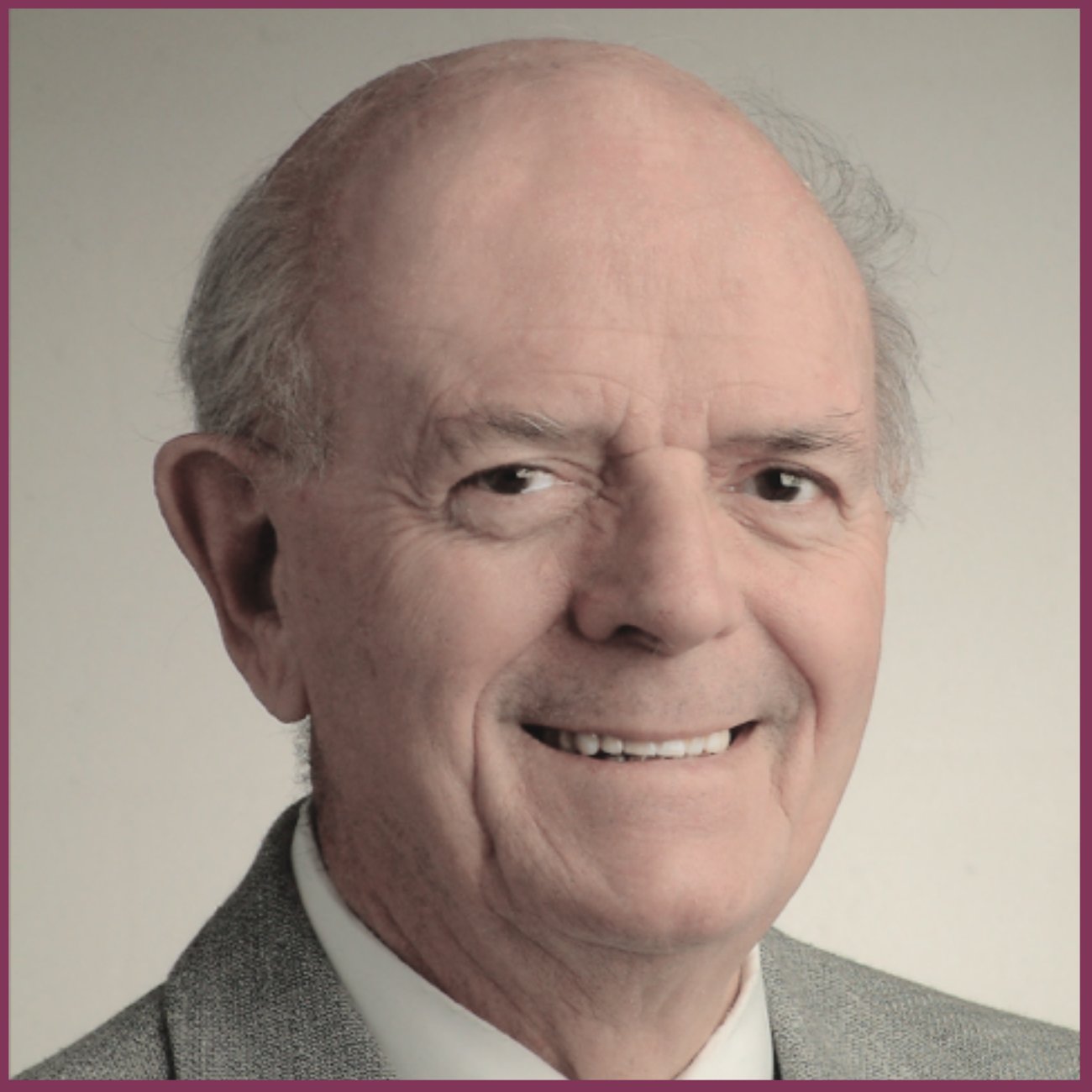
Emeritus Professor Reg Appleyard CBE, FASSA
Emeritus Professor Reginald Thomas (“Reg”) Appleyard passed away on 25 August.
Professor Appleyard was President of the Economic Society of Australia (WA) from 1972 to 1974 and was awarded the Austin Holmes Prize in 1992. He was appointed professor of economic history at the University of Western Australia (UWA) in 1967, a position he held until 1992. During his time at UWA Professor Appleyard had many significant national and international advisory roles, including positions with CEDA, the OECD, UNESCO, the International Organization for Migration and the UNHCR. His research included studies on immigration and economic history.
He was a Fellow of the Academy of the Social Sciences in Australia and was appointed a Member of the Order of Australia in 1999.
|
|
 |
|
Emeritus Professor
Reginald Thomas ("Reg") Appleyard
1927-2025 |
|
|
|
|
|
|
|
|
The Academy of the Social Sciences in Australia acknowledges Aboriginal and Torres Strait Islander peoples as the First Peoples of Australia.
We acknowledge and pay our respects to the traditional owners of the land on which our national office is located, the Ngunnawal and Ngambri peoples, and
to their elders past and present. |
|
|
|
|
|
|